Wednesday, December 14, 2016

Unit 5 Reflection

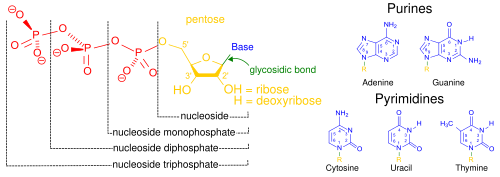
          This unit was about DNA, the central dogma of biology, mutations and gene regulation. The essential understandings of this unit were the structure of DNA and RNA, how proteins are made, how mutations occur, how genes are expressed, and how genes are regulated. DNA and RNA are made up of nucleotides which are a sugar, phosphate group, and a nitrogen base. Proteins are made through the central dogma of biology. The central dogma of biology is the steps from DNA to RNA to protein to phenotype.

Image result for nucleotides
https://upload.wikimedia.org/wikipedia/commons/thumb/e/e2/Nucleotides_1.svg/500px-Nucleotides_1.svg.png

          Some of my strengths in this unit were understanding many of the concepts and lessons taught, and the labs that we did. I feel like this because every lesson presented the information well and I could grasp that information well. Also, the concepts were very easy to understand and it seemed logical for that to happen. My weaknesses were understanding eukaryotic regulation. It was a difficult concept for me to grasp and understand at first compared to everything else I've learned in biology, but I was able to understand it once I reviewed it a couple of times. Some of my successes were getting the homework done and the blog posts done. My setbacks were minimal. I would say that one of my setbacks was understanding how eukaryotic regulation worked, but I was able to overcome it by reviewing it more. I want to learn more about eukaryotic regulation because I feel like I was given a brief overview into it and I want to go more in depth into that. Some questions I have are about mutations and regulation. I wonder about how all this extremely complicated things are happening inside our very own bodies and how much mystery and complexity there is to life.
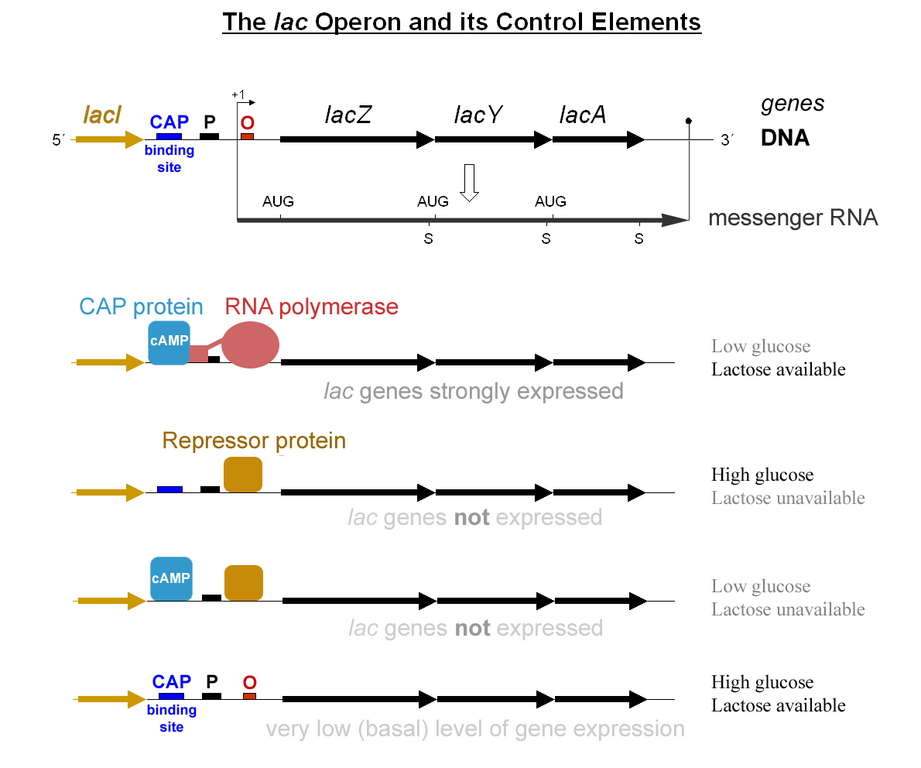
Image result for lac operon
https://upload.wikimedia.org/wikipedia/commons/thumb/d/d2/Lac_operon-2010-21-01.png/921px-Lac_operon-2010-21-01.png

          My growth as a student this unit has been a normal amount in my opinion. I have learned new concepts and ideas to genetics and this has allowed me to understand more about what happens in our bodies and why it does happen. This has led me to being a better team member in labs and has made my character better in the classroom by being more on top of my work at home and in class. Last unit I took the VARK questionnaire. It gave a list of questions about how I handle problems in life and it gave me a score of me being a visual, aural, reading/writing, and kinesthetic learner. I have applied that in this unit to help me learn better than before. Some times it worked, like for understanding eukaryotic regulation which I had trouble understanding using my own personal way of learning, and some times it didn't, like for when I was learning about the central dogma of biology. Just listening and watching the vodcast was all I needed to understand the dogma completely. When I tried to use the ways of learning from the VARK questionnaire results, I found that it was more efficient and easier to use my way instead of the questionnaire's ways. This has also made me a better student by making me realize different ways of studying and how and when to use different techniques for studying at different times.

Monday, December 12, 2016

Protein Synthesis Lab

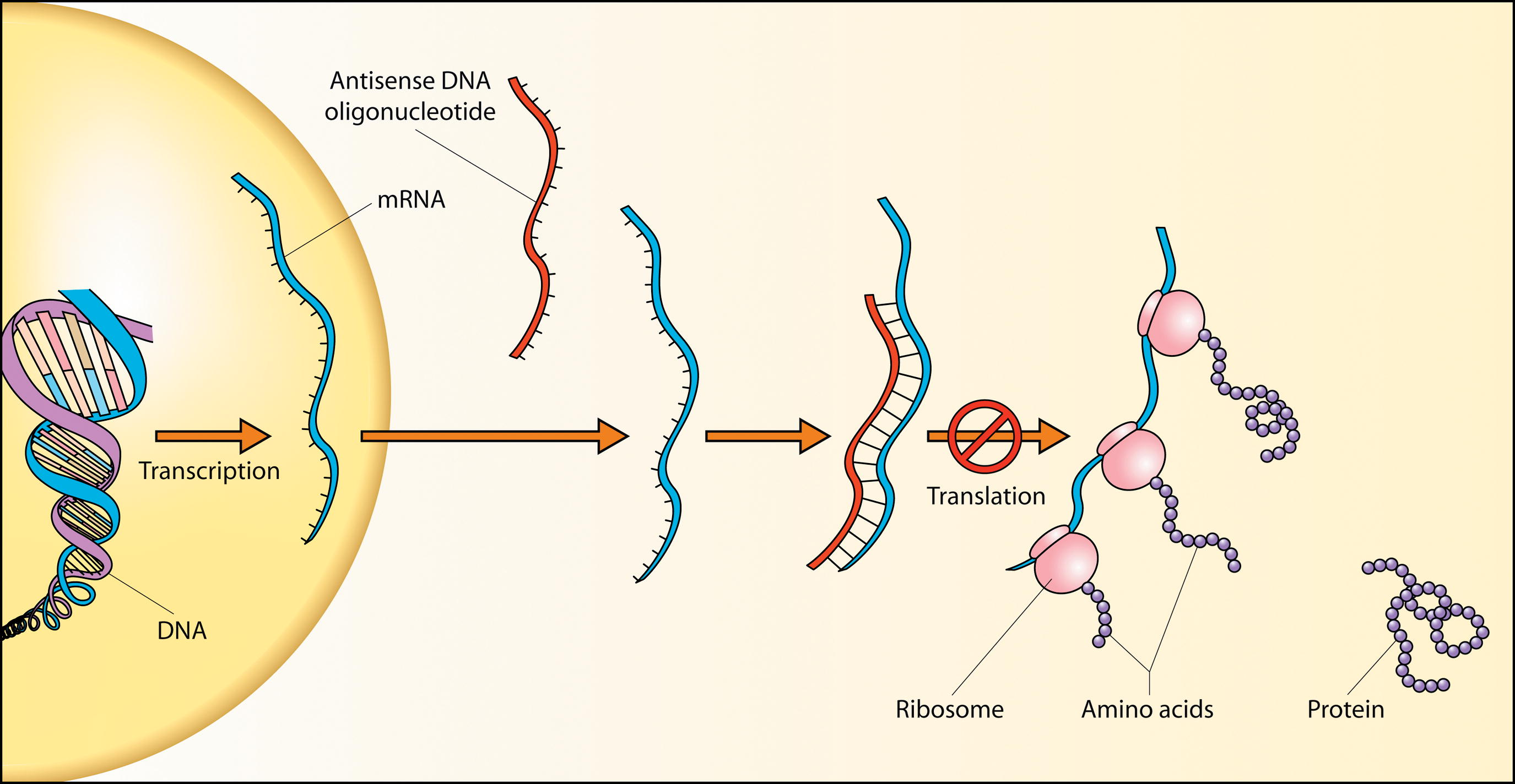
          The five steps to make a protein start at the DNA. The DNA has the gene to make the protein, so the RNA polymerase comes in to make a copy of messenger RNA to send out to the ribosome. The mRNA reaches the ribosome and it tells it what protein to make. Every three nitrogen bases in the mRNA is called a codon and it codes for one amino acid. The ribosome builds the protein using the instructions from the mRNA to put together the amino acids to make the protein.
Image result for mRNA
https://upload.wikimedia.org/wikipedia/commons/1/19/Antisense_DNA_oligonucleotide.png
       
          Changing the bases in a DNA molecule can affect the protein in many ways. These are called mutations. There are different types of mutations and some of them affect the protein more than others. One type of mutation is substitution, where a base pair is replaced or substituted with another, which might affect an amino acid for the protein. Another type of mutation is a frameshift mutation. These include insertion and deletion. Insertion is when an extra base pair or more are added to the original sequence. This causes the whole sequence of DNA to shift over, causing different amino acids to be made and a completely different protein. Deletion is when a base pair or more are deleted from the sequence, resulting in the sequence to shift back and change the protein that the original strand coded for. Frameshift mutations usually had a bigger effect on the overall protein compared to the point mutations like substitution, because they changed the whole protein, where as the point mutations only changed one or two amino acids.
Image result for mutation
https://upload.wikimedia.org/wikipedia/commons/3/31/DNA_UV_mutation.png
         
          I chose insertion because I thought that inserting a base pair at the front of the gene would make it so that the start codon would be messed up, so the protein couldn't even begin to make it. This mutation compared to the other mutations is very different. This mutation stopped the protein from ever getting made, where as the other mutations just changed the original protein. It does matter where the mutation occurs because if it happens at the beginning, then the protein can't start to be made.
Image result for insertion mutation
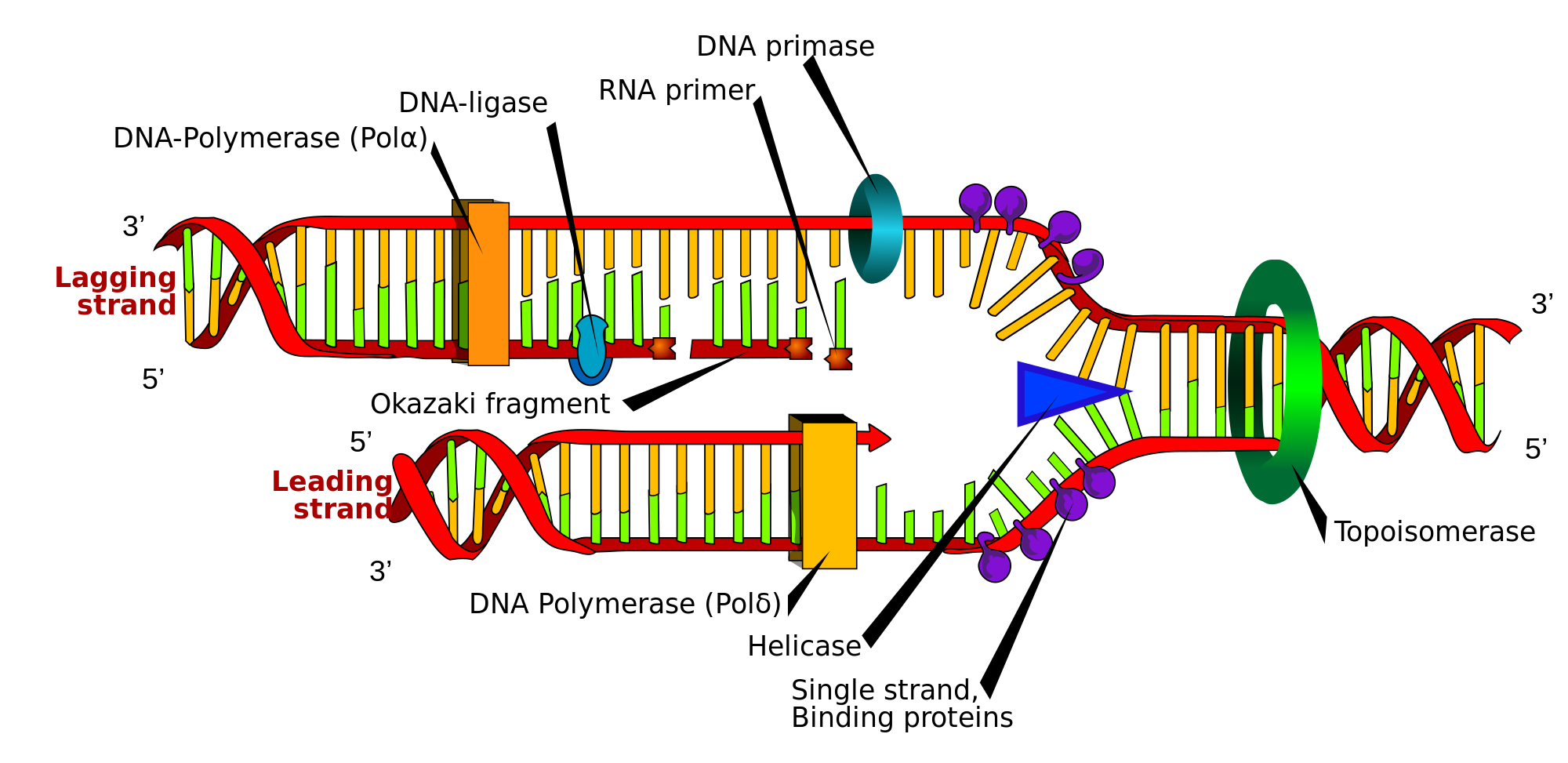
https://upload.wikimedia.org/wikipedia/commons/thumb/8/8f/DNA_replication_en.svg/2000px-DNA_replication_en.svg.png
         
          Mutations could affect my life by affecting my health and how my body works. A mutation that causes a disease is a mutation in only one base pair that causes sickle cell anemia. It alters the hemoglobin in the red blood cells and makes the cell change from a doughnut shape to a sickle shape. This causes the oxygen to not be held in the red blood cells and body parts don't get enough oxygen to function. Also, the abnormal shape of the cells cause them to not fit into the really small blood vessels and clog them up, not allowing much to go through.
Image result for sickle cell anemia
https://upload.wikimedia.org/wikipedia/commons/8/86/Risk-Factors-for-Sickle-Cell-Anemia_(1)2.jpg

Friday, December 2, 2016

DNA Extraction Lab

          In this lab we asked the question "How can DNA be separated from cheek in order to study it?" We found that DNA can be separated from human cheek cells. The evidence is that we observed clumps of DNA float in the middle of the solution to extract the DNA. This evidence is also present in the lab handout that we were given. It gave the steps to extract the DNA and what happens when the DNA is being extracted. This data supports our claim because after we did the procedure to extract the DNA, we observed clumps of DNA floating in the middle of our solution.
          While our hypothesis was supported by our data, there could have been errors due to not having an easy to understand list of steps for our procedure. All we were given was information about extracting DNA, which did not give any specific steps, and a jumbled list of specific steps. This information could have been messed up while trying to put together the right order of steps and could have gotten invalid data or even no results at all. Another error could have been not measuring the substances correctly. This would lead to variations in data and possibly make our data invalid. It could also make it so that we don't get any results at all. Due to these errors, in future experiments I would recommend that whoever is doing this lab would get a proper list of steps to follow so data doesn't get compromised. Also, I would recommend that people doing this lab measure the substances properly and add them properly so as to not compromise the data.
          This lab was done to show us what DNA looked like in real life and how to separate it from the rest of the cell. From this lab I learned about what specific chemicals do to the structure of the cell to break it down and separate it to extract only the DNA out, which helps me understand the concept of DNA's chemical structure and the rest of the cell's chemical structure. Based on my experience from this lab, the way I would apply this to another situation is that I could use this knowledge to extract other things besides DNA in the cell, and I could also use this skill and knowledge to analyze real DNA extracted from the cell to observe it and possibly determine the genetic code from that strand of DNA. This relates to what I learned in the vodcasts. It taught me the many characteristics and functions of DNA, which led me to do this lab better than if I didn't know what DNA's properties were.

Monday, November 21, 2016

Unit 4 Reflection

          Today we did a lab about the different types of crosses. We used coin flipping to model the Law of Independent Assortment and to make the gametes to cross with each other to form an individual with a recombination of the parents' traits. My expected results were based on the probability of the genes and alleles in the punnet square. The process of meiosis and gene segregation causes there to be four different gametes to make a punnet square with to see the possible combinations of alleles. My actual results came out to be very close to the expected results in the dihybrid cross. In this cross, there were many possibilities for offspring traits, and most of them were heterozygous and only two were double homozygous. The monohybrid crosses had four possible genotypes. I crossed monohybrids with autosomal genes and X-linked genes. The autosomal inheritance is when the autosomal genes are used to inherit a trait. X-linked inheritance is when the X chromosome is used to inherit a trait. The limit to using probability to predict our offspring's traits is when there is a mutation that is undetectable and it could affect the probability by making it wrong. This understanding relates to my life because the traits I have are inherited from my parents which have been through all of these processes.
          This unit was about genetics and inheritance. The themes and essential understandings are basically "Why is Sex so Great?" More specifically, they were the cell cycle (mitosis), meiosis, asexual reproduction, sexual reproduction, inheritance, Gregor Mendel's inheritance laws, and different types of crosses between individuals. My strengths were understanding the process of mitosis, meiosis, the laws, crosses, and punnet squares. These seemed very logical and orderly to me which made it easier to understand to me. My weaknesses were understanding what happens to the specific chromosomes when all of this happens because they kept duplicating and moving around during these processes. What I learned about managing the demands of the class was that I need to plan what assignments have more priority and do them at a good quality. Some successes were completing homework and understanding many of the topics that were taught in this unit. Some setbacks were the infographic because it was extremely time consuming and tiring to work on.
          What I learned from these experiences was the many different things that happen in genetics. I never knew that what happens to our chromosomes is so complicated just to reproduce. The content that I learned were the processes and steps of mitosis and meiosis, the differences between asexual and sexual reproduction, what asexual reproduction is, the inheritance laws of Gregor Mendel, the history of modern genetics which was invented by Gregor Mendel, and the different types of crosses between individuals to determine traits for their offspring. What I learned from making the infographic was that it is a lot of work. It can seem extremely boring and can seem like a really heavy workload to accomplish, however it reinforced the knowledge that I learned from the vodcasts and labs to a large extent. I want to learn more about the different types of inheritance and the effects of them in the external environment. Some unanswered questions I have are about the placements of alleles and genes and chromosomes and where they move around and rearrange themselves to form more genetic variation. I wonder about how the specifics and practical applications of all of these topics that I learned in this unit. This makes me a better student than before for many reasons. They are that I learned the many topics in genetics, how to make an infographic, and that how to balance the much heavier amount of work to do in this unit with the rest of my life.
    Image result for mitosis diagramImage result for genetics
          This unit I also learned ways on how to learn. I did a VARK questionnaire and it analyzed what my preferred ways of learning are. My scores were visual 11, aural 7, read/write 14, and kinesthetic 8. Based on that score, it said that my preferred way of learning is a multimodal learning preference. The results did not surprise me because I feel like I learn fast and I understand things well even when it is taught in different styles and ways than others. What I do to prepare for the test is sit down with one of my parents and have them quiz and review the content with me. This is active learning like how I was shown in class and I have been studying like this for my whole life. What I can do to prepare for the test is to actually study and be active while I study because I have time constraints that prevent me from studying for a sufficient amount of time to review all the information efficiently.

Sunday, October 30, 2016

Is Sexual Reproduction Important?

          In the selected reading, Dr. Tatiana's Sex Advice to All Creation by Olivia Judson, animals were invited to a talk show about the benefits and costs of sexual and asexual reproduction. The sexually reproducing animals, like the rams, pigeons, mice, and armadillos as depicted in this reading, argue that sexual reproduction is the best way to reproduce and that asexually reproducing organisms will become extinct. The asexually reproducing organism that was interviewed in the story was a rotifer called Philodina. The Philodina argued that its species is an asexually reproducing species and that organisms can survive using asexual reproduction for a long time, unlike what the sexually reproducing organisms argued about.
         Sex is important because it causes more genetic variation which can lead to an organism to adapt better to its environment. "Sex, they insist, is essential. And ancient asexuals -- creatures such as the bdelloid rotifers that have lived without sex for millions of years -- should not exist" (Judson 216). Reproduction does not cause genetic variation by itself, it needs genetic mutation alone to create genetic variation which is rare and unreliable. This is the reason why most asexual species go extinct. "But although asexuality often evolves -- it pops up in groups from jellyfish to dandelions, from lizards to lichens -- it rarely persists for long" (Judson 216). The main benefits of sexual reproduction is the genetic variation created when the sperm and egg fuse together to form a genetically unique zygote which grows into a genetically unique organism. "In eukaryotic sex, you get half your genes from your mother and half from your father.... Thus, at the end of meiosis, each sperm and egg carries one complete but unique mixture of genes -- a complete but shuffled deck" (Judson 219). The costs of sexual reproduction is the dangers of STDs and parasites and that it takes up a lot of energy. The benefits of asexual reproduction is that the genes stay relatively the same, so organisms can become extremely adapted to their environment. The costs are also that genes stay the same. "[Philodina's] proof rests on the fact that cloning for millions of years has dramatic effects on the way genes evolve. 'Being asexual for generations leaves an unmistakable mark, a molecular tattoo on your genes,' she said smugly, ' If you always clone, there's only one source of genetic novelty, only one thing that could cause my genes from to differ from my mother's, grandmother's, or great-great-grandmother's: mutation" (Judson 222).
          Some things that are confusing to me are that how mutations occur, why they occur, and how they impact the organism with them.

Monday, October 24, 2016

Unit 3 Reflection

          This unit was about cells, their functions, and their structures. The themes and essential understandings were that cells are the basic unit of life and they carry out all life processes that are needed to survive. Also, we learned about the cell itself and the different organelles and the processes that occur inside the cell as it adapts to the environment and what it does to keep itself alive. My strengths were that I knew most of the content from previous classes. I knew what most of the organelles and their functions. I also knew what cellular respiration and photosynthesis were generally, so that helped me understand the specifics when we learned that. My weaknesses were understanding the concepts of osmosis and hypotonic and hypertonic solutions. Also, I had trouble with understanding the very specific processes that occur in photosynthesis and cellular respiration, although I had a basic understanding about the two processes. 
          What I learned from this unit and its experiences were that I learned how our cells function and how organisms live on the microscopic level. I also learned many things that I already knew, but more in depth, such as photosynthesis, cellular respiration, and the origins of cells and organelles. This makes me a better student that before because I know more content and I understand how cells live and how they function to keep organisms alive and how they react to their environments. I want to learn more about the fine details of photosynthesis and cellular respiration and the evolution of the modern-day eukaryotic cell. 

Friday, October 21, 2016

Photosynthesis Virtual Lab

Lab 1: Glencoe Photosynthesis Lab


Analysis Questions
1. Make a hypothesis about which color in the visible spectrum causes the most plant growth and which color in the visible spectrum causes the least plant growth?
If plants absorb mostly blue and/or red light, then it will produce the most plant growth.
If plants absorb mostly green and/or yellow light, then it will produce the least plant growth.


2. How did you test your hypothesis? Which variables did you control in your experiment and which variable did you change in order to compare your growth results?
I used the virtual lab to test my hypothesis. The variables I controlled were type of plant, amount of light, and soil. The variable I changed in order to compare my growth results was the wavelength or color of light.


Results:

Filter Color
Spinach Avg. Height (cm)
Radish Avg. Height (cm)
Lettuce Avg. Height (cm)
Red
18
13
11
Orange
14
8
7
Green
3
1
3
Blue
19
14
13
Violet
16
10
8


3. Analyze the results of your experiment. Did your data support your hypothesis? Explain. If you conducted tests with more than one type of seed, explain any differences or similarities you found among types of seeds.
Yes. The differences between other seeds is the type of plant and how much it grew. The similarities were that they all reacted to the light relatively the same.


4. What conclusions can you draw about which color in the visible spectrum causes the most plant growth?
I can conclude that blue and red light causes the most plant growth.


5. Given that white light contains all colors of the spectrum, what growth results would you expect under white light?
I would expect the plant to grow to be the average of all of the individual colors.


Site 2: Photolab

This simulation allows you to manipulate many variables. You already observed how light colors will affect the growth of a plant, in this simulation you can directly measure the rate of photosynthesis by counting the number of bubbles of oxygen that are released.
There are 3 other potential variables you could test with this simulation: amount of carbon dioxide, light intensity, and temperature.
Choose one variable and design and experiment that would test how this factor affects the rate of photosynthesis. Remember, that when designing an experiment, you need to keep all variables constant except the one you are testing. Collect data and write a lab report of your findings that includes:
  • Question
  • Hypothesis
  • Experimental parameters (in other words, what is the dependent variable, independent variable, constants, and control?)
  • Data table
  • Conclusion (Just 1st and 3rd paragraphs since there's no way to make errors in a virtual lab)
*Type your question, hypothesis, etc. below.  When done, submit this document via Canvas.  You may also copy and paste it into your blog.


Question:
Will increasing the amount of CO2 cause more photosynthesis to occur?


Hypothesis:
If CO2 is used for photosynthesis, then a greater amount of CO2 will cause the plant to do more photosynthesis and produce more oxygen.


Experimental Parameters:
Dependent Variable: Rate of photosynthesis
Independent Variable: Amount of C
Control: 0 CO2
Constants: Water temperature (10 ⁰C), light intensity (100%), light wavelength (white), water, plant


Data Table:

Amount of CO2
None
All
O2 bubbles/ 15 sec
3
6
Conclusion:
In this virtual lab, I asked the question, will increasing the amount of CO2 cause more photosynthesis to occur? I found that increasing the amount of CO2 increases the production of oxygen in photosynthesis. When I increased the amount of CO2, more oxygen bubbles came out of the plant compared to no CO2. This data supports my claim because the higher amount of CO2 caused the plant to photosynthesize more and produce more oxygen.
This lab was done to demonstrate the effects of CO2 on photosynthesis. From this lab, I learned that increasing the amount of CO2 increases the rate of photosynthesis and produces more oxygen, which helps me understand the concept of the role of CO2 in photosynthesis. Based on my experience from this lab, I could apply this knowledge to another situation by helping stop global warming by planting more plants, which will suck CO2 out of the air and reduce the amount of global warming.


Microscope Lab

          In this lab, we asked the question, "What are the key features of autotrophs, heterotrophs, eukaryotes, and protists?" The key features we found were different among the different cells that we observed. In the amoeba, I was able to observe the nucleus, cell membrane, and the pseudopods. In the euglena, I was able to observe the nucleus and the chloroplasts. In the bacteria, I was able to observe the different types of bacteria. In the cyanobacteria, I was able to observe a single cell. In the spirogyra, I was able to observe the cell wall, chloroplasts, and cytoplasm. In the muscle cell, I was able to observe the nucleus, muscle fibers, and striations. In the ligustrum, I was able to observe the cell walls, cell membrane, veins, xylem, and phloem. Here are the pictures of all the organisms that we studied in this lab. The characteristics of autotrophs are that they are usually green and have chloroplasts. The characteristics of heterotrophs are they have a nucleus. The characteristics of eukaryotes are that they have nuclei. The characteristics of prokaryotes are that they don't have nuclei.
Amoeba
High power, black, odd shape, many black blobs inside, black blobs may be organelles, eukaryotic, heterotrophic
Euglena
High power, thin, dark nucleus, blue, green, eukaryote, autotroph and heterotroph
Bacteria Cells: General Shapes
Very small, different shapes, prokaryotes, autotroph or heterotroph


Cyanobacteria
High power, ancestor of chloroplast, small blue balls in a string, prokaryote, autotroph


Spirogyra
High power, cells are stacked on top of each other, fits together in boxes, eukaryote, autotroph


Muscle Cell
High power, pink and long, big cell, eukaryote, heterotroph


Ligustrum
High power, red and blue cells, cell walls, eukaryote, autotroph

Wednesday, October 19, 2016

Egg Diffusion Lab

          In this lab we asked the question, how and why does a cell's internal environment change, as its external environment changes? We found that when the egg is placed in sugar water, it shrunk both in circumference and mass. The solution that the egg was in was hypertonic, meaning that there was a greater concentration of solute outside the egg than inside, so water left the egg to the outside solution to balance the concentration and reach equilibrium.

Class Data: Sugar Water                                                     Percent Change

Group #
3
5
6
Average
% Change in Mass
-48.4
-35.8
-43.12
-42.17
% Change in Circumference
-18.75
-30.5
-9.8
-19.6

We also found that when the egg is placed in deionized water, it grew both in circumference and mass, except for one group. The solution that the egg was in was hypotonic, meaning that there was a lesser concentration of solute outside the egg than inside, so water went into the egg to balance the concentration and reach equilibrium.

Class Data: Control (Deionized Water)                               Percent Change

Group #
2
4
7
Average
% Change in Mass
1.1
0.69
1.74
1.18
% Change in Circumference
6.1
-8.3
8.82
2.21

       
          One group had data that contradicted our hypothesis because, their egg was placed in deionized water, but it shrunk in circumference. Our hypothesis was that the egg would increase in mass and circumference. The egg grew in mass, but its circumference shrunk. This affected the results by changing the average. Also, some possible errors could be that people could have measured the circumference the long way first, then the short way after the experiment. That would have changed the results by making it seem like the egg shrunk in circumference or grew in circumference. Due to this error, in future experiments I would recommend keeping track of which way the egg is measured initially to keep the data accurate.
            This lab was done to demonstrate our understanding of osmosis and diffusion in cells. From this lab I learned the difference between hypertonic solutions and hypotonic solutions and their effects on a cell, which helps me understand the concept of how cells grow and shrink. Based on my experience on this lab, I could apply this knowledge to figure out how to quickly hydrate someone's cells when they are dehydrated. 
          When the sugar concentration increased, the mass and the circumference shrunk because the cell has to take out more water from itself, through the membrane to achieve equilibrium. The cell's internal environment changes as its external environment changes because it has to adapt in order to survive in changing external environment. This lab demonstrates a biological principal I've learned in class by showing that organisms adapt to their surroundings. Water is added to plants in markets to keep them moist. Salt is sprinkled on icy roads to cause the ice to diffuse away and melt into water. Based off of this experiment, I would want to test the affects of salt on ice.