https://upload.wikimedia.org/wikipedia/commons/1/19/Antisense_DNA_oligonucleotide.png
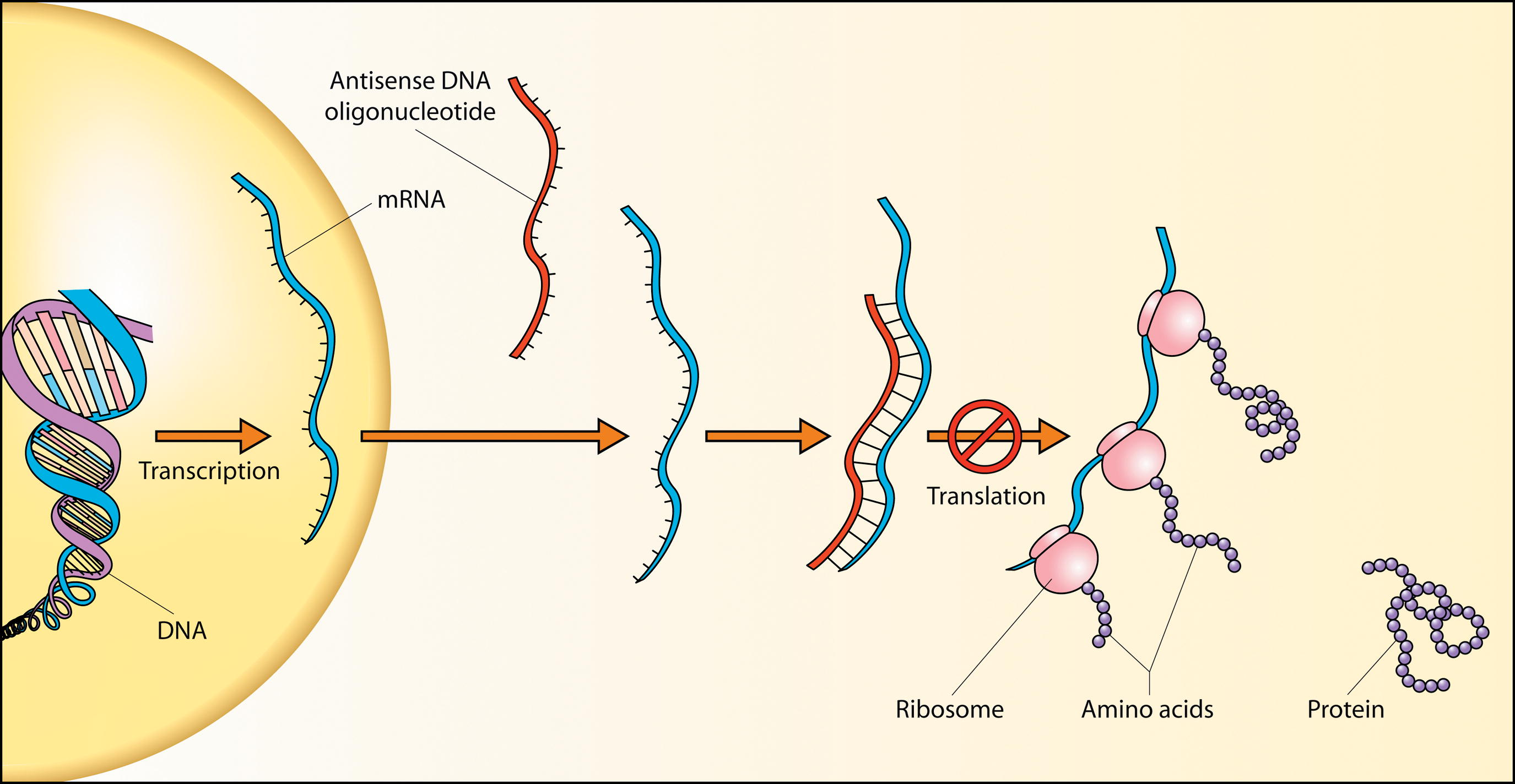
Changing the bases in a DNA molecule can affect the protein in many ways. These are called mutations. There are different types of mutations and some of them affect the protein more than others. One type of mutation is substitution, where a base pair is replaced or substituted with another, which might affect an amino acid for the protein. Another type of mutation is a frameshift mutation. These include insertion and deletion. Insertion is when an extra base pair or more are added to the original sequence. This causes the whole sequence of DNA to shift over, causing different amino acids to be made and a completely different protein. Deletion is when a base pair or more are deleted from the sequence, resulting in the sequence to shift back and change the protein that the original strand coded for. Frameshift mutations usually had a bigger effect on the overall protein compared to the point mutations like substitution, because they changed the whole protein, where as the point mutations only changed one or two amino acids.

https://upload.wikimedia.org/wikipedia/commons/3/31/DNA_UV_mutation.png
I chose insertion because I thought that inserting a base pair at the front of the gene would make it so that the start codon would be messed up, so the protein couldn't even begin to make it. This mutation compared to the other mutations is very different. This mutation stopped the protein from ever getting made, where as the other mutations just changed the original protein. It does matter where the mutation occurs because if it happens at the beginning, then the protein can't start to be made.
https://upload.wikimedia.org/wikipedia/commons/thumb/8/8f/DNA_replication_en.svg/2000px-DNA_replication_en.svg.png
Mutations could affect my life by affecting my health and how my body works. A mutation that causes a disease is a mutation in only one base pair that causes sickle cell anemia. It alters the hemoglobin in the red blood cells and makes the cell change from a doughnut shape to a sickle shape. This causes the oxygen to not be held in the red blood cells and body parts don't get enough oxygen to function. Also, the abnormal shape of the cells cause them to not fit into the really small blood vessels and clog them up, not allowing much to go through.
2.jpg)
https://upload.wikimedia.org/wikipedia/commons/8/86/Risk-Factors-for-Sickle-Cell-Anemia_(1)2.jpg

No comments:
Post a Comment