The purpose of this lab was to observe the internal and external organs of a pig. This dissection relates to what I learned in this unit because I learned about all of the organs and organ systems in the vodcasts. I was able to observe these organs and organ systems in real life when I dissected the pig. For example, I could see all of the organs of the digestive system and the sequence of how food is digested in the body. I could also see the respiratory system and what organs were in that system such as the lungs, diaphragm, and the trachea.
My favorite part of the dissection was when we cut open the belly to expose the thoracic and abdominal cavities. I was surprised to see the shape of each of the organs and the colors of them. It looked unlike the diagrams I have seen, but it was accurate to what I saw in the pig. At first, I was grossed out by the inside of the pig, but over time, I was able to look into it and observe all of the organs. I think this dissection was a valuable experience because it opened my eyes to see something that I have never seen before and to experience how the body works and looks in real life. Below is the youtube video that I made of the dissection and the explanation of each organ system.
Tuesday, May 30, 2017

Friday, May 19, 2017
20 Time Individual Reflection
My 20 time project was about how and why we forget. I conducted research about this topic, then I made and did an experiment to test memory and memory loss. I chose this challenge because I was very interested in this when I thought of it. Also, it has helped me learn how my memory works in the context of remembering formulas for math or concepts for biology. For this project, I was mostly focused on self-improvement of my knowledge of memory and my learning process.
My initial plan for this project was discussed in 20 Time Blogpost 1. It was to research this topic to see what it was about, since I didn't know much about how memory worked. Then, the next step was to create an experiment to test what I learned. After that was to conduct the experiment and collect data, then analyze it. I would say that I stuck relatively well to my initial plan explained above. My successes were that I made and conducted a successful experiment. I didn't have any failures, but there might have been inconveniences such as time management and conflicts. My biggest obstacle would be getting started because this was such a vague project with no set deadlines or goals. It was different than what I usually do for projects. However, I managed to finish most of what I wanted to accomplish in the first place.
What I learned was about the complex processes of how our brains memorize and forget information. I also learned how to create an experiment. Some soft skills, or life skills, that I learned were time management and resolving conflict issues. If I had a chance to do this again, I would manage my time better and I would plan around my schedule to fit 20 time in to get more work done. What I have learned about myself is that I can improve on my time management and that I have learned about how I forget and what I can do to improve my memory. For now, I think this challenge is done and I don't have any intention of continuing it.
Tuesday, May 9, 2017
Unit 9 Reflection
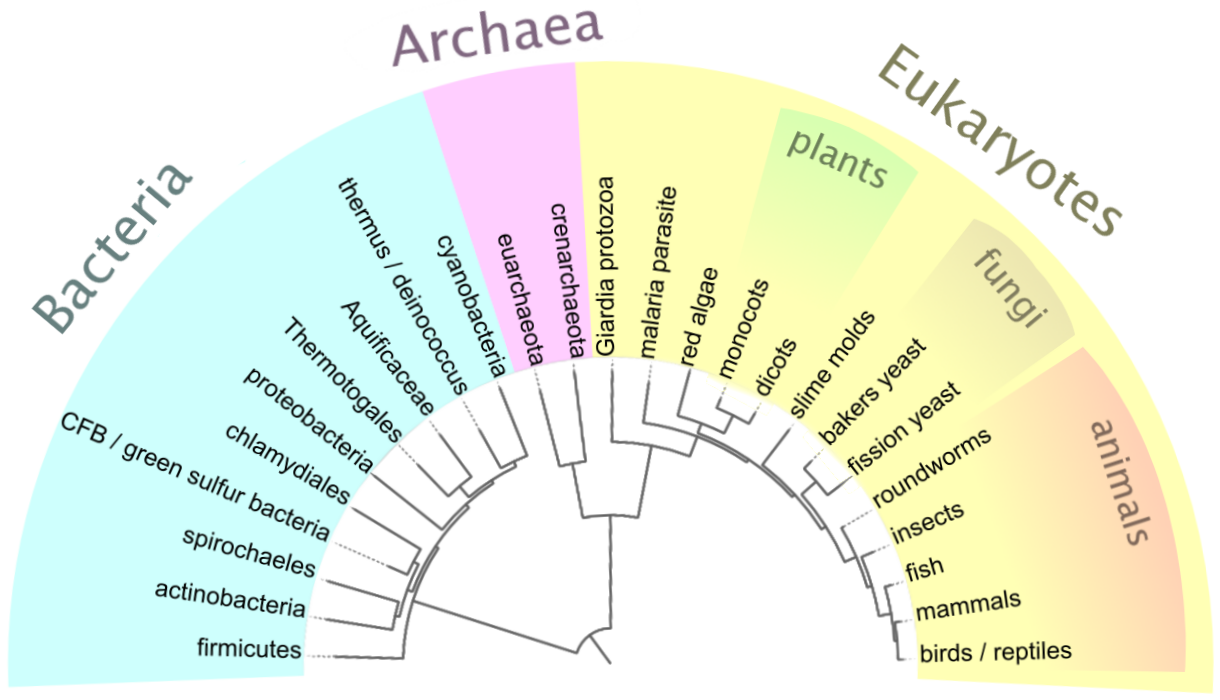
In this unit we learned about the study and organization of organisms called taxonomy. The themes and essential understandings were the defining characteristics of the different taxonomic groups. The different taxonomic groups starting from largest to smallest are domain, kingdom, phylum, class, order, family, genus, and species. The three domains are Bacteria, Archaea, and Eukarya. In bacteria, there are gram-positive (thick cell wall) and gram-negative bacteria (not thick cell wall). Archaea was discovered in the 1970's in extreme environments and are called extremophiles. Eukarya has many kingdoms: Protista, Fungi, Plantae, and Animalia. Fungi are organisms that reproduce using spores, have a fruiting body with hyphae and mycellium, and consume decayed, organic material. The different types of fungi are club fungi, sac fungi, and bread molds. Plantae are organisms that use photosynthesis or chemosynthesis to produce their own food, and they are called autotrophs. The different phyla of plants are mosses, ferns, gymnosperms (cone bearing plants), and angiosperms (flower bearing plants). Animalia are organisms that are heterotrophic and are animals. The different phyla of animals are Porifera (sponges), Cnidaria (jellyfish and coral), Platyhelminthes (flatworms), Molluska (oysters, clams, etc.), Annelida (segmented worms), Echinodermata (sea stars), Arthropoda (insects and crustaceans), and Chordata (vertebrates). Within the phylum Chordata, there are the classes Agnatha (jawless fish), Condricthyes (cartilaginous fish), Osteicthyes (bony fish), Amphibia (amphibians), Reptilia (reptiles), Aves (birds), and Mammalia (mammals).
What I want to learn more about is how did structures such as a jaw or a backbone form when there was no organism with those traits. Also I want to learn more about how life colonized land from the water. Some unanswered questions that I have are that why is the nerve cord hollow, and why do some chordates lose their notochord, hollow backbone, pharyngeal slits, and tail?
In this unit we did a project of making a scaled Geologic Timeline. We started from the beginning of the creation of the earth to the present and we included all of the historical events, periods, eras, and biological events that occurred during earth's history. My experience was that it helped me see the expanse of earth's history, what exactly happened in the distant past, and what led to the evolution of the species we see today. It was also a good collaboration experience because I had to work in a group.
Also in this unit I made and did a presentation about an organism from the book What on Earth Evolved: 100 Species That Changed the World by Christopher Lloyd. The organism that I chose was Penicillium, the fungus responsible for the discovery and production of antibiotics. This organism has impacted the earth by helping humans gain strength against bacteria that would kill off humans easily. It has also impacted the world by allowing bacteria to evolve at a rapid pace, making it that we have to produce new antibiotics every year to keep up with the constant evolution of the bacteria. Below is my presentation.
 |
| https://upload.wikimedia.org/wikipedia/commons/e/e6/Simplified_tree.png |
In this unit we did a project of making a scaled Geologic Timeline. We started from the beginning of the creation of the earth to the present and we included all of the historical events, periods, eras, and biological events that occurred during earth's history. My experience was that it helped me see the expanse of earth's history, what exactly happened in the distant past, and what led to the evolution of the species we see today. It was also a good collaboration experience because I had to work in a group.
 |
| Picture of our Geologic Timeline |
Subscribe to:
Comments (Atom)